%20(1).avif)
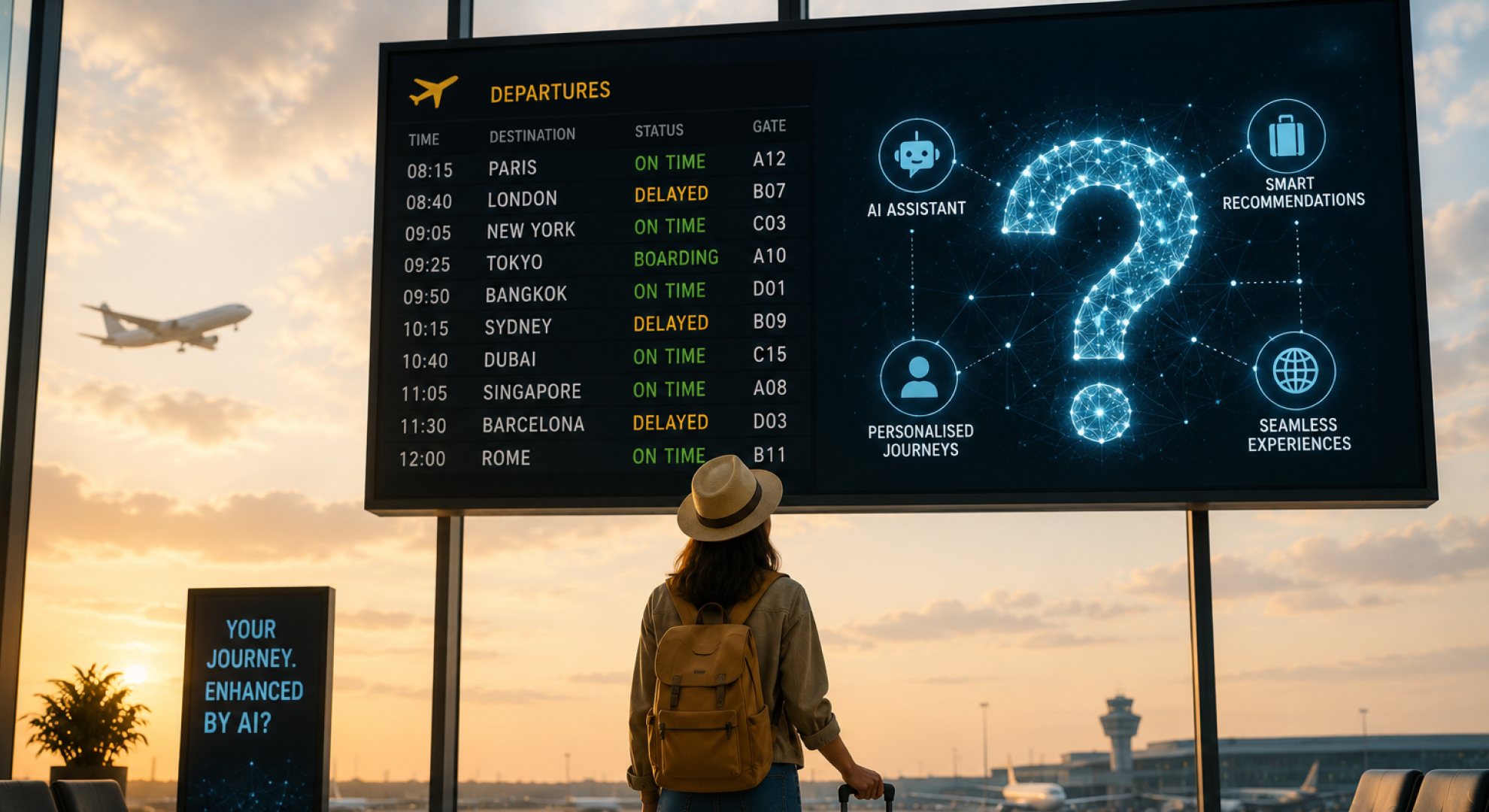
At 11 PM on a Friday, a passenger calls your contact center. Their flight is in 36 hours. They used the government eVisa portal, made an error on their application, and now they do not know if their travel authorization is valid. Who is responsible for solving the problem?
If your answer is "not us, we just directed them to the official site," you are not wrong legally. But operationally, financially, and from a customer relationship standpoint, the problem has already landed on your desk.
The assumption that government visa websites are the responsible, minimal-cost option is one of the most persistent myths in travel operators' commercial planning. The costs are real. They are visible in departmental spreadsheets for contact center queues, denied boarding incidents, missed ancillary revenue, and the invisible passenger scorecard, where travelers associate a stressful pre-travel experience with your brand rather than a bureaucratic portal they will never think about again.
The scale of what is at stake is growing fast. The share of international air travelers requiring an ETA or eVisa is projected to grow up to 50% by 2030, according to UNWTO data. "This shift is already underway: 10 countries introduced new electronic entry requirements in 2024, 31 in 2025, and at least 35 more have been announced for 2026, including 30 European countries rolling out ETIAS," Sean White, Customer Operations Lead at Sherpa, shares. "ETIAS alone will see nearly 1.4 billion people affected from 59 visa-exempt countries." Every new requirement is a new friction point in the pre-departure journey. And right now, most airlines, OTAs, and travel operators are managing that friction by pointing passengers at a government portal and hoping for the best.
This is not an argument against government portals. It is an argument for understanding the true cost of making them the default, and for recognizing that ownership of the travel document journey is both a risk question and a revenue opportunity.
What customer support burden do airlines incur when passengers use government sites?
Directing passengers to government portals does not remove your contact center from the equation. It makes your contact center the only place those passengers can turn when something goes wrong.
Government portals end at submission. There is no 24/7 support channel, no proactive status update, and minimal, if any, human escalation path. For straightforward applications submitted well in advance, that is usually manageable. But pre-departure visa problems rarely surface at convenient times, and the passengers who hit them are anxious, time-pressured, and looking for someone to help.
That someone is your airline or OTA.
Your frontline agents are trained on fares, baggage, disruption, and loyalty programs. They are not visa specialists, and are often legally bound from answering questions on the topic. A passenger calling to ask whether their India eVisa remains valid after transposing two digits in their passport number is not a query your team can resolve. It escalates. It consumes time at every tier. It incurs costs regardless of the outcome. And the passenger's stress, however unfair, attaches itself to the airline that sold them the ticket or the OTA that pulled the holiday together.
The upstream cause is worth understanding. Government portals have strict requirements across the application, from photo dimensions, file size, to passport data formats. However, they typically surface errors only after multiple pages of a form have been completed.
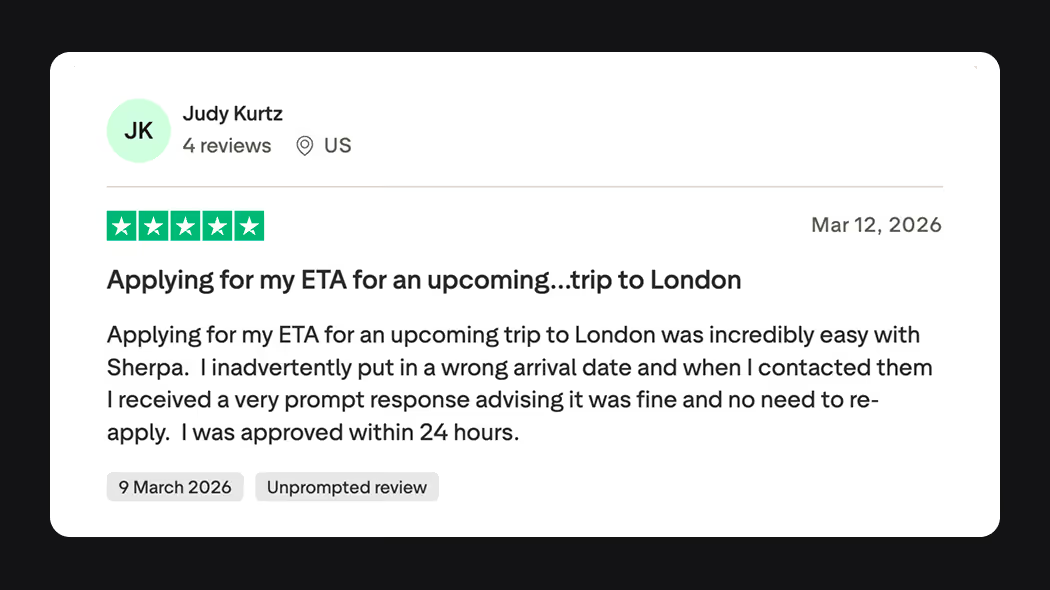
A traveler uploads something that appears compliant, receives a vague rejection message, and either abandons the application or resubmits something that still does not meet the specification. One traveler described spending days attempting to use India's government portal, enlisting four friends with technical skills to help, before being directed to our service, which completed the whole thing faster than their failed attempts had taken. Another tried Egypt's government site and gave up entirely before finding an alternative in Sherpa.
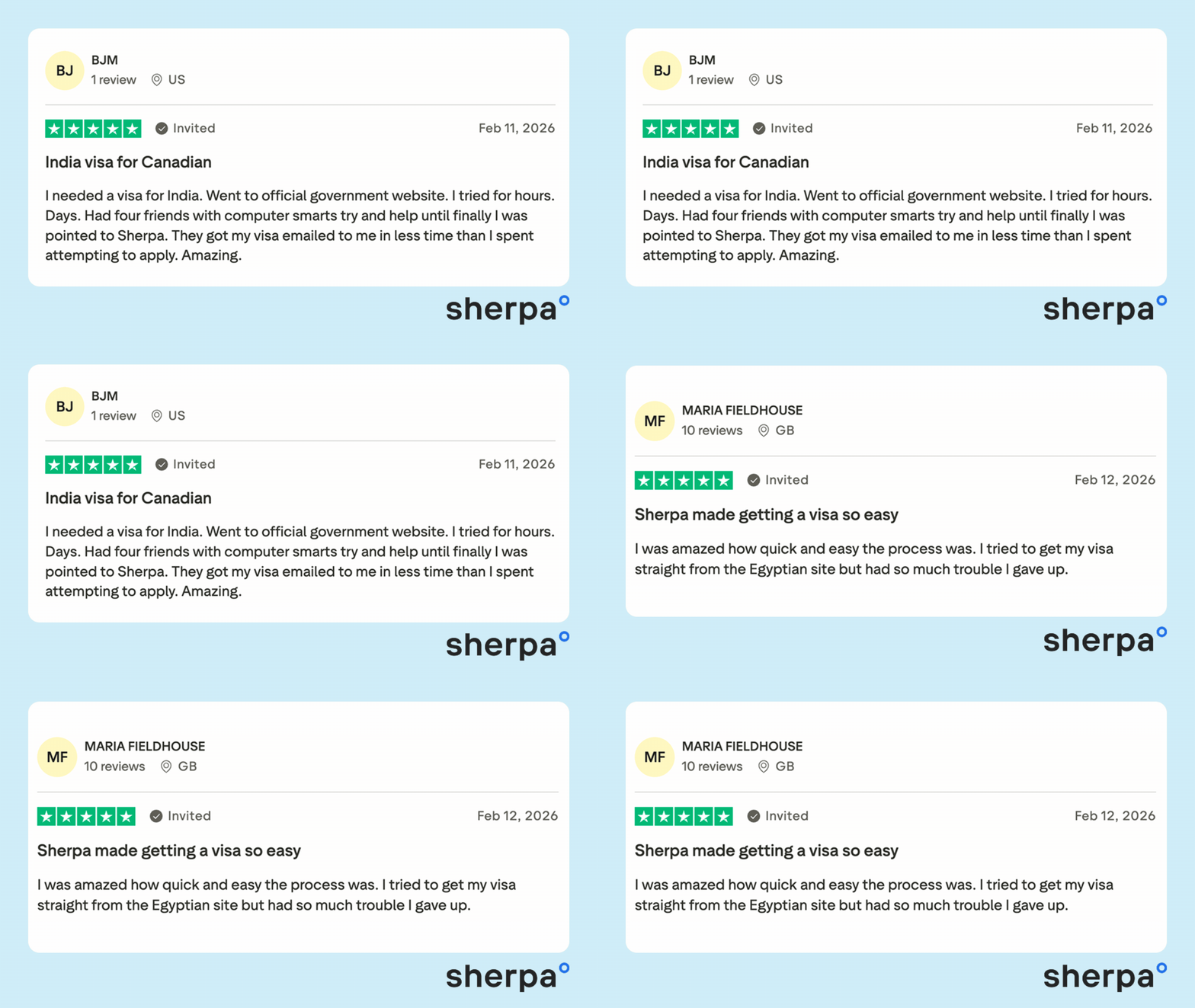
This is the support burden airlines are currently absorbing invisibly. The passenger who could not complete their application on the government site. They call, email, and arrive at your gate, unsure whether their documentation will suffice.
The comparison is direct. A managed platform handles application support for every traveler who uses it. Visa-related queries do not reach your contact center. The government site model means that 100% of confused or stuck passengers have one place left to go: you.
Consider a European carrier operating routes to the UK, US, and Canada. With 20 million passengers annually, 20% may require an eVisa or an electronic travel authorization. If just 2% of those passengers contact your call center with a visa-related query, at an industry average of $5 per interaction, that is $400,000 in annual support costs. One line item. Before escalations. Before gate queries. Before the passenger who calls gets no resolution, boards anyway, and requires repatriation at the carrier's expense.
What is the failure rate of government site applications, and who owns the cost when a travel is at risk?
Most government visa application failures are preventable. When failures occur, airlines and OTAs bear the financial and operational consequences.
The two most common failure categories are biographic data entry and document quality. "Biographic data entry is one of the two biggest issues," says White. "A surname like McDonald might appear as MC DONALD in the machine-readable zone of a passport. If the traveler types 'McDonald' into the application, some government systems treat that as a mismatch. For some governments, even a small discrepancy like this can cause a rejection or produce a travel document that won't scan correctly at the border."
.avif)
Government portals enforce strict photo specifications, but many validate only at the end of the process. Travelers who encounter photo errors after completing forms often abandon the application or submit non-compliant documents. For example, one traveler was rejected by the Indian government portal due to a low-quality passport scan but received a visa through Sherpa within 24 hours, thanks to clear guidance during the application process. Another traveler needing a UK ETA noted that Sherpa auto-filled required fields from their passport upload, reducing errors.
%20(1).gif)
Neither failure was the traveler being careless. Both are direct consequences of portals built for regulatory compliance rather than consumer usability.
Processing timelines present additional risks. Government estimates are often optimistic; for example, a 72-hour eVisa may actually take five business days. Religious and cultural holidays can also cause delays, as seen when Vietnam suspended eVisa issuance during the Lunar New Year. Travelers who apply close to departure may be left without valid authorization. "Government portals can feel essentially like a black box after submission," says White. "Unlike a platform that schedules applications within the optimal window to ensure validity aligns with travel dates, government portals often leave that timing judgment entirely to the traveler."
When that traveler is denied boarding, the airline bears the cost. "Under international aviation rules (ICAO Annex 9), when a passenger boards with incorrect documentation, the cost of repatriation falls on the carrier," says Max Tremaine, CEO of Sherpa. "Port fines, duty of care obligations, and repatriation are real costs to airlines. Often there is only a handful of people who know those costs, and when you ask them about it they shudder."
The financial exposure is well documented. IATA's 2024 benchmarking across 49 airlines found a rate of 12 inadmissible passenger (INAD) cases per 100,000 passengers, but that average conceals significant variance. One Europe-based carrier with around 40 million annual passengers reported an INAD rate of 750 per 100,000. IATA puts the average cost per INAD case at up to $25,000, reflecting fines, escorts, repatriation flights, overbooking costs, security, and legal assistance. The same dataset recorded 8 major operational disruptions per 100,000 flights due to INAD cases in 2024, comprising over 1,000 delays and nearly 2,000 rebookings across the surveyed airlines.
It is important to note that not all denied boardings are preventable. IATA's research shows that many INAD cases are non-controllable, meaning airlines lacked the information to intervene before boarding. However, controllable cases could be avoided with better pre-departure guidance, real-time form validation, and photo compliance checks.
Sherpa's data offers a useful benchmark. Fewer than 15% of applications require any follow-up document submission, with the most common reasons centred around passport photography issues, e.g. glare on a photo, low image quality or missing document corners. The majority of these are caught by our system or verification process pre-submission. The overall approval rate across Sherpa applications is 99.1%.
What happens to the customer relationship when airlines send passengers to a portal they do not control?
By directing passengers to government portals, airlines sacrifice control of the customer experience and miss out on ancillary revenue opportunities.
A passenger in the process of applying for a travel authorization is not passive. They are focused, time-aware, and paying close attention to anything related to their trip. Travelers consistently describe this moment, navigating through an application and receiving confirmation, as one of the most emotionally significant points in the pre-departure experience. One described receiving approval over a weekend and noting the contrast with their expectation of bureaucratic delay.
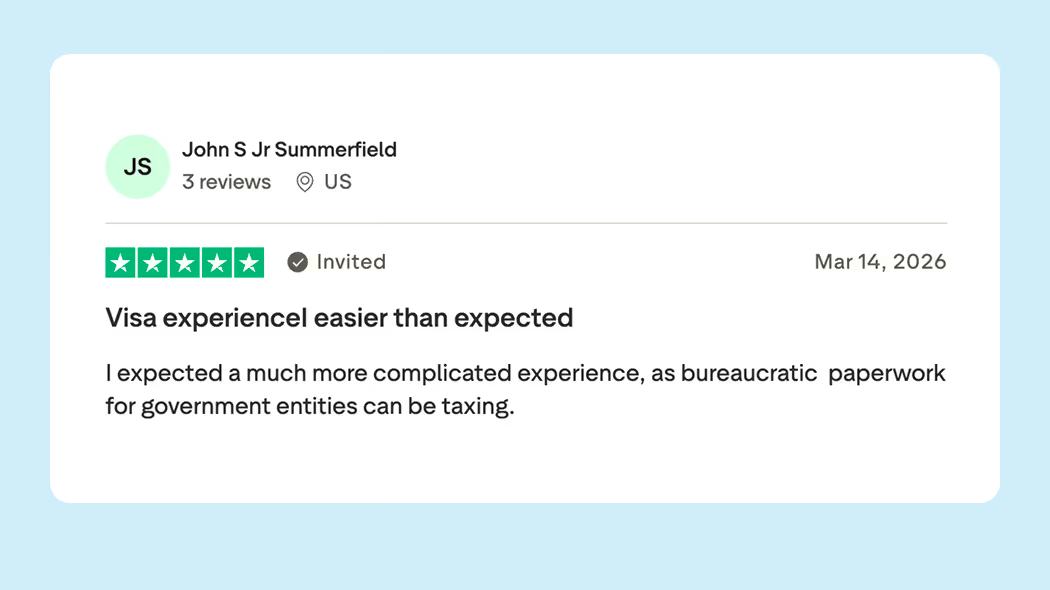
The passengers who have a smooth, well-supported documentation experience remember it. One traveler who used Sherpa across two separate trips noted that the service kept them informed at every stage and communicated with the destination country on their behalf throughout the process. That is the experience of being looked after. It is also the experience that the airline could provide.
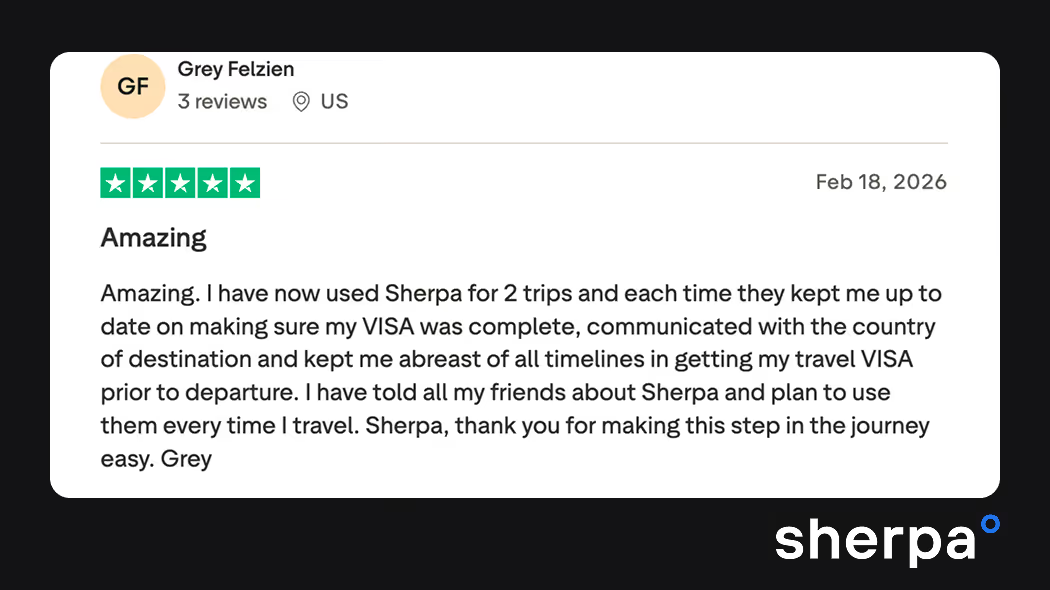
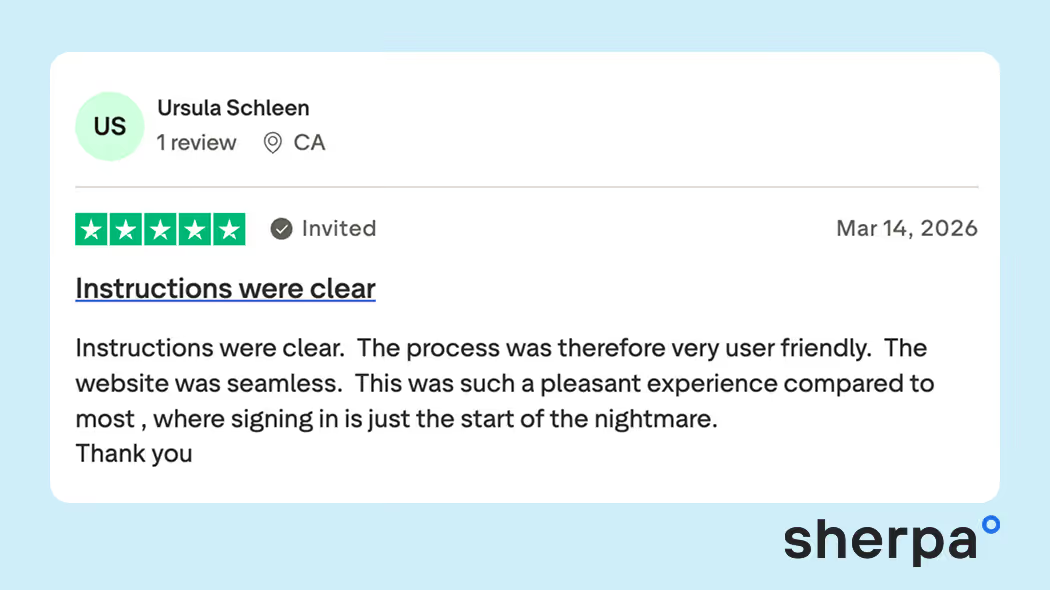
That emotional quality, relief, confidence, the sense that the trip is actually happening, is what airlines could be owning. When a passenger is directed to a government portal instead, that relief is attached to a faceless process, or worse, replaced by the anxiety and frustration that government portals notably produce. One reviewer described spending 30 minutes fighting with an online government visa application before finding a better route. Another said that on government portals, signing in is just the start of the nightmare.
The data blind spot is another dimension that affects the customer experience team. When passengers use government sites, airlines have no visibility into application status, completion rates, or which passengers on a given route remain outstanding on their travel authorization. You cannot send a targeted reminder 14 days before departure. You cannot identify, 72 hours out, which passengers are at risk. The first time you find out is at check-in or at the gate, where the cost of the problem is highest, and the options for resolving it are fewest.
The revenue dimension is equally direct. Sherpa's data shows that the check-in window, within 48 hours of departure, is one of the strongest conversion points in the pre-departure journey. Airlines with an integrated travel document service in that flow can generate over $6.80 per passenger at that touchpoint alone. Airlines routing passengers to government portals instead generate nothing and cannot redirect the traveler back to their site afterwards.
The IATA 2025 Global Passenger Survey found that 78% of passengers want a smartphone that combines a digital wallet, digital passport, and loyalty cards to navigate the full travel journey, rising to 87% among passengers aged 25 and under. The direction of passenger expectations is clear: they want digitized, personalized, and seamless experiences that enable smooth travel.
.gif)
One reviewer found Sherpa through their airline's booking flow and described a seamless experience, including a weekend approval turnaround time faster than that of a government portal. That is true integration: the passenger remains within the airline's ecosystem, the airline retains visibility, and the traveler connects a positive documentation process with the facilitating brand.
What is the true cost comparison: platform fee vs customer service overhead vs denied boarding liability?
Airlines evaluating the cost of a managed eVisa platform are typically comparing it against zero. The correct comparison is against the sum of costs that the government site model is already generating.
The perceived cost is the platform revenue share. The actual cost includes the following:
Opportunities from:
Gaining revenue at high-intent touchpoints. The check-in window, within 48 hours of departure, is one of the highest-converting moments in the passenger journey for travel services. Airlines with an integrated travel document service can generate $4.50 per passenger at the Manage My Booking stage, rising to over $6.80 at the check-in window, where passenger intent is at its highest.
Customer lifetime value. A passenger who has a stress-free pre-travel experience is more likely to rebook. Travelers who have a smooth documentation experience are also more likely to recommend the airline that facilitated it.
The breakeven question is straightforward: how many denied boardings, support escalations, or missed ancillary conversions need to be avoided each year for the platform to pay for itself? For most airlines operating international routes at any meaningful volume, that number is small.
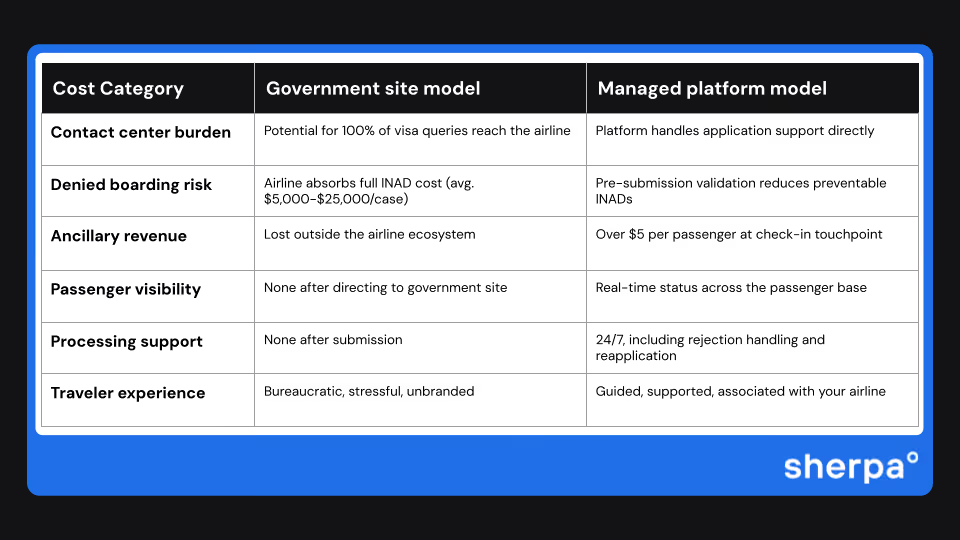
The government site is not free. It is billed to a different cost center.
Why could the "safe" option be the riskiest choice?
Directing passengers to official government portals can appear conservative. In practice, it transfers risk to the airline while providing none of the control needed to manage it.
The regulatory environment is moving in one direction. The UK ETA, now mandatory, carries penalties of up to £50,000 per passenger for carriers that fail to verify eligibility under the Authority to Carry Regulations. ETIAS will bring 30 European countries into a comparable framework. Governments are making airlines responsible for pre-departure documentation outcomes because pre-departure verification works, and airlines are the most effective enforcement point. That responsibility is not going away.
Platforms built specifically for travel document compliance give airlines the infrastructure to meet that obligation. Sherpa's guidance has been independently reviewed by Transport Canada and the UK Home Office for data accuracy and aligns with official government requirements. That external validation matters: it is the difference between a platform that follows compliance standards and one that has been tested against them.
Government portals, by definition, are the compliance reference point. They are not built to serve as a verification layer for airlines, and they offer no tools to help carriers meet their obligations under regulations such as the UK's Authority to Carry scheme.
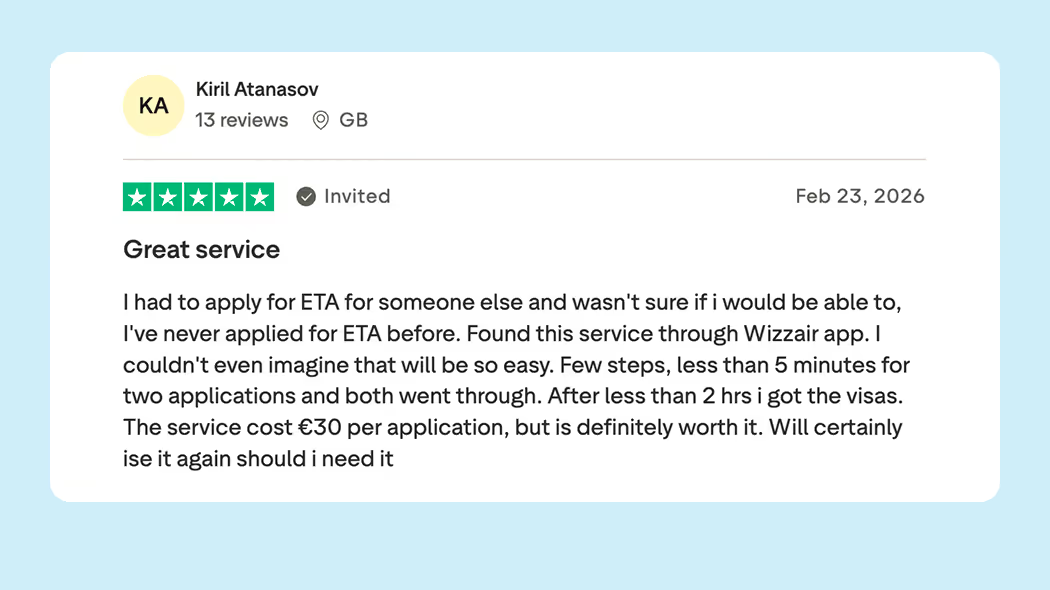
There is also a competitive dimension. As integrated travel document services become more common among carriers, the absence of one reads as a gap. A traveler comparing two airlines on a visa-required route, one of which offers guided eVisa support within the booking flow and one of which links to a government portal, is making a decision that goes beyond price. One reviewer specifically found Sherpa through a Wizz Air app integration, completed two applications in under five minutes, received both visas within two hours, and described the service fee as definitely worth it.
The cost of doing nothing is already on your books
Government visa websites are not free. The costs are real, measurable, and distributed across your business in ways that make them easy to miss until you go looking for them.
Contact center calls, denied boarding incidents, missed revenue at high-intent touchpoints, passengers who leave your ecosystem frustrated and book elsewhere next time: none of these appear as a line item labeled "government portal cost." But they are there, and they compound as electronic entry requirements expand globally.
Airlines that reframe this question from "should we charge passengers for visa help?" to "what is the total cost to our business of not providing it?" tend to reach a different conclusion quickly. The hidden costs of the government site model are not hypothetical. They are sitting in your operations budget, your ground handling reports, and your post-travel NPS scores right now.
If you want to understand what that looks like for your route network and passenger volumes, we are happy to work through it with you.
Sources
- IATA, Opportunities in Digital Identity (2025 Global Media Day). 49-airline survey: 111,781 INAD cases across 969M passengers in 2024; rate of 12 per 100,000 pax; avg cost up to USD 25,000/case; 8 major disruptions per 100,000 flights. Passenger survey: 78% want integrated digital wallet/passport/loyalty experience (87% aged 25 and under).
- SITA, "DTCs for Airlines: Reduce Inadmissible Travelers." https://www.sita.aero/pressroom/blog/dtcs-for-airlines-reduce-inadmissible-travelers/
- Matchbox Aero, "INAD Costs: A Global Overview." https://matchbox.aero/inad-costs-an-overview/
- IATA, "Understanding INADs." https://www.iata.org/en/publications/newsletters/iata-knowledge-hub/understanding-inads-inadmissible-passengers-and-their-impact-on-travel/
- Fragomen, "The Impact of Electronic Travel Authorisation on Airlines." https://www.fragomen.com/insights/the-impact-of-electronic-travel-authorisation-on-airlines-compliance-and-communication.html

.png)